
Thermal Roof Moisture Surveys
Our thermal roof surveys can provide everything from quick temperature-anomaly screening to ASTM C1153-aligned methods and documentation. We discuss your requirements first to scope the right level of detail—whether it's basic thermal imaging for defect spotting or comprehensive reports for insurance claims and engineering review. Target delivery: within one week based on agreed scope and weather conditions.
Capability status: This page describes what we capture and deliver on a commissioned commercial-roof thermographyproject. It is not a project list.
The offering uses 640×512 radiometric thermal capture on an RTK-positioned aircraft and can provide georeferenced visual and radiometric thermal layers for review in the client's GIS. Thermal signatures remain investigation targets; we do not issue per-module diagnoses.
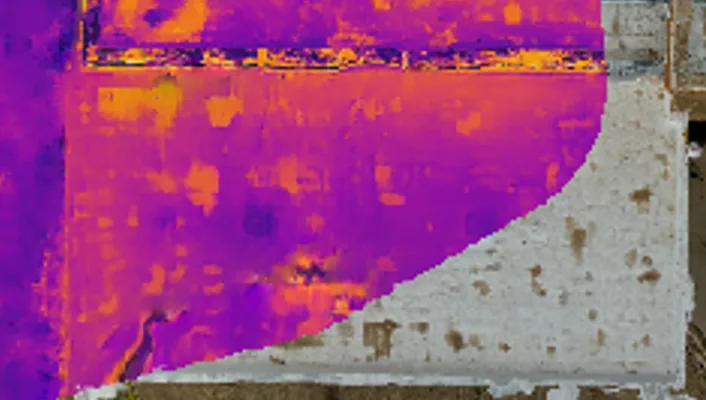
Temperature Anomalies We May Identify
- Potential Wet Insulation: Temperature differentials that may indicate trapped moisture (requires core sampling or invasive testing to confirm actual moisture content)
- Membrane Breach Indicators: Georeferenced locations of temperature anomalies that may suggest compromised roofing membrane
- Drainage Patterns: Surface temperature variations showing potential standing water areas or drainage issues
- Thermal Bridging: Temperature patterns suggesting insulation gaps or compressed areas
Our Process
Following ASTM C1153 protocol ensures reliable, defensible results:
- Evening Flight Timing: Conducted 2-4 hours after sunset when temperature differentials are optimal
- Weather Requirements: Minimum 10°F temperature delta between day/night, winds below 15mph, no precipitation within 24 hours (inspections may be rescheduled if conditions not met)
- Georeferencing: RTK-equipped aerial capture; delivered positioning limits are stated
- Professional Reporting: Georeferenced thermal imagery, moisture probability assessments (High/Moderate/Low), repair priority recommendations
How Thermal Moisture Detection Works
Trapped moisture is detectable because water changes how a roof releases heat. The survey is timed around that physics:
1. Solar Loading
2. Radiative Cooling
3. Radiometric Capture
4. Analysis & Mapping
Deliverables
Comprehensive documentation for insurance claims and maintenance planning:
- Georeferenced thermal orthomosaic showing entire roof surface (via photogrammetry processing)
- High-resolution thermal and RGB imagery
- Defect location map with GPS coordinates (CSV/KML format)
- Professional PDF report with ASTM C1153-aligned methods documentation
- Moisture probability assessments for affected areas (High/Moderate/Low likelihood of subsurface moisture)
Roof Systems We Survey
Thermal moisture detection works best on roof systems with an insulation layer that can trap water. We'll confirm fit for your specific assembly before scheduling.
Excellent Detection
- • Single-ply (TPO, EPDM, PVC)
- • Modified bitumen
- • Built-up roofing (BUR)
- • Spray polyurethane foam (SPF)
Good with Caveats
- • Standing seam metal (with insulation below)
- • Concrete deck systems
- • Older built-up with gravel (thin layer)
Limited Effectiveness
- • Heavy gravel ballast
- • Vegetative/green roofs
- • Bare metal without insulation
- • Wet-applied coatings over unknown substrate
Custom Pricing Tailored to Your Project
Residential Roofs
Starting at Affordable Prices
Pricing based on square footage and complexity. Most inspections complete in 1-2 hours.
Commercial Roofs
Contact for Custom Quote
Comprehensive ASTM C1153 documentation. Pricing varies by scope—we'll provide a personalized estimate promptly.
Includes: Flight, processing, georeferenced thermal maps, PDF report, GPS defect locations, ASTM C1153 alignment statement; not certification
Custom Pricing Based on Project Needs: Square footage, roof complexity, access requirements, and report detail level
No travel fees within 40 miles: Hale, Floyd, Swisher, Castro, Lamb counties + Lubbock Metro
See our drone roof inspection cost guide for detailed pricing by building size, the thermal roof inspection guide for field methods, or estimate roof-moisture exposure with our moisture mapping calculator.
Important Scope & Expectations
Our thermal roof surveys follow the ASTM C1153 framework and deliver documented temperature data and georeferenced thermal maps, making them a valuable screening tool for your facility maintenance and insurance documentation needs. We focus on rapid detection of temperature anomalies that may indicate subsurface moisture, helping you prioritize repairs and minimize damage. Here's a transparent overview of our service parameters:
Engaging our services means you value this professional, ASTM C1153-aligned approach to roof condition screening and maintenance planning.