
Residential Solar Panel Inspections in West Texas
Independent drone-based thermal screening for rooftop solar systems with performance issues, missing installer support, post-storm damage concerns, or upcoming roof work. Clear data. Clear pricing. No service-plan pressure.
Capability status: This page describes what we capture and deliver on a commissioned residential-solar inspectionproject. It is not a project list.
The offering uses 640×512 radiometric thermal capture on an RTK-positioned aircraft and can provide georeferenced visual and radiometric thermal layers for review in the client's GIS. Thermal signatures remain investigation targets; we do not issue per-module diagnoses.
A residential scope would adapt radiometric capture and QA methods to the roof layout, access constraints, and homeowner's evidence need.
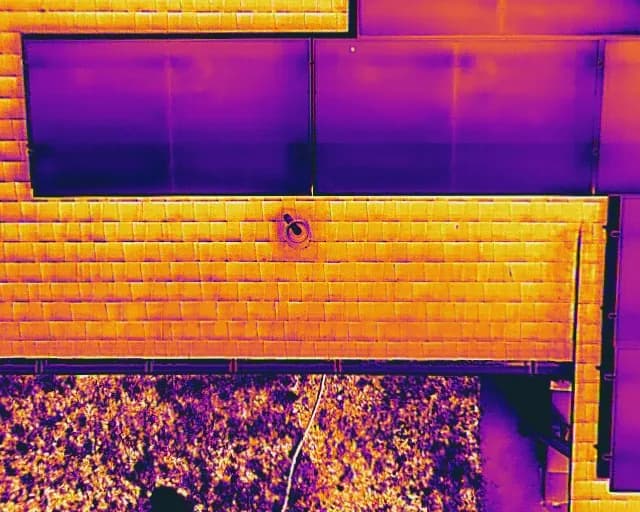
Who Needs a Residential Solar Inspection
- Your installer went out of business. You need an independent assessment of your system's condition, but the company that installed it is gone.
- Monitoring shows a production drop. Your system used to produce more. Thermal imaging can reveal which panels or strings may be underperforming and why.
- After hail, wind, or severe weather. West Texas weather can damage panels in ways that aren't visible from the ground. Thermal imaging reveals damage that visual inspection misses.
- Before roof replacement. Roofers need to remove and reinstall your panels. A pre-work thermal baseline documents system condition before panels are touched.
- Buying or selling a home with solar panels. An independent thermal inspection provides objective documentation of system health for real estate transactions.
- You want third-party screening evidence before paying for repairs. Before spending money on a service call, get an independent view of what's actually happening on your roof.
- You want a clear baseline before spending money on service. Gather independent screening evidence before making repair decisions about your solar investment.
What Your Inspection Includes
- Radiometric thermal imagery of your entire the accessible rooftop array, with coverage gaps disclosed
- RGB overview imagery for visual context and panel identification
- Annotated PDF summary identifying observed anomalies — hot spots, underperforming strings, potential connection issues
- Clear next-step guidance for you, your roofer, or your solar technician — what the findings mean and what to do about them
- Standard turnaround: 2 business days for local jobs
Residential Solar Inspection Pricing
Standard Residential
Systems under 10 kW
$395
Typical rooftop array (20–30 panels). Includes flight, thermal + RGB capture, annotated PDF report, and next-step guidance.
Large / Complex Systems
10 kW+ or multi-array
$495
Larger arrays, split arrays, ground-mount + rooftop combinations, or complex roof geometry.
Includes: Flight, radiometric thermal capture, RGB overview, annotated PDF report, next-step guidance
Custom quoted: Restricted airspace, expedited turnaround, multi-system properties
Pricing Note: Starting prices are base rates for standard local conditions. Final quotes depend on system size, roof accessibility, environmental conditions, and report detail level. Thermal imaging identifies temperature anomalies; electrical testing may be required to confirm root cause. Contact us for a custom quote.
Service Area
No travel fees within 40 miles of Hale Center, TX — covering Hale, Floyd, Swisher, Castro, and Lamb counties, plus the Lubbock metro area.
Outside core service area: Limited availability, quoted individually.
Founder-led. Based in Hale Center. Not a national franchise, online marketplace, or outsourced contractor network. When you book an inspection with Aerial Accuracy, you're working directly with us — local pilots who know West Texas conditions.
Important Scope Notes
Our residential solar inspections provide independent thermal screening and documentation. Here's a transparent overview of what our service does and does not include:
Frequently Asked Questions
What if my solar installer went out of business?
You're not alone — thousands of Texas homeowners are in this situation after recent installer bankruptcies. An independent thermal inspection gives you a clear picture of your system's current condition without relying on the company that installed it. Our report documents any issues and provides guidance on next steps, whether that's contacting your warranty provider, engaging a new installer, or simply confirming your system is performing well.
How long does a residential solar inspection take?
The on-site drone flight typically takes 20–40 minutes depending on system size and roof configuration. We handle all setup and teardown. You'll receive your annotated PDF report within 2 business days for local jobs.
What will the report tell me?
Your report includes radiometric apparent-temperature imagery, RGB overview photos for visual context, and annotations identifying thermal signatures as investigation targets for qualified ground follow-up. Findings are screening results, not root-cause diagnoses.
Do you do solar panel repairs?
No. We are an independent screening and documentation service. We flag visible thermal signatures for qualified ground follow-up; we do not diagnose root cause, perform electrical work, replace panels, or modify your system.
What's the best time of year for a thermal inspection?
Thermal inspections are most effective during periods of strong, consistent sunlight — typically March through October in West Texas. Panels need to be under load and producing power for thermal anomalies to be visible. We schedule flights during peak solar hours, generally between 10 AM and 2 PM.
How much does a residential solar panel inspection cost?
Our standard residential solar inspection starts at $395 for systems under 10 kW (typically 20–30 panels). Larger or complex systems (10 kW+, multi-array, or ground-mount combinations) start at $495. There are no travel fees within 40 miles of Hale Center, TX. Final quotes depend on system size, roof accessibility, and environmental conditions.
Schedule Your Solar Inspection
Independent screening. Published pricing. No service-plan pressure.
No travel fees within 40 miles of Hale Center, TX