
Thermal Screening Support for Feedlots
Aerial thermal screening to complement pen rider observations and veterinary care. Detect temperature anomalies that may indicate health issues requiring ground examination.
Capability status: This page describes what we capture and deliver on a commissioned feedlot health-screeningproject. It is not a project list.
The offering uses 640×512 radiometric thermal capture on an RTK-positioned aircraft and can provide georeferenced visual and radiometric thermal layers for review in the client's GIS. Thermal signatures remain investigation targets; we do not issue per-module diagnoses.
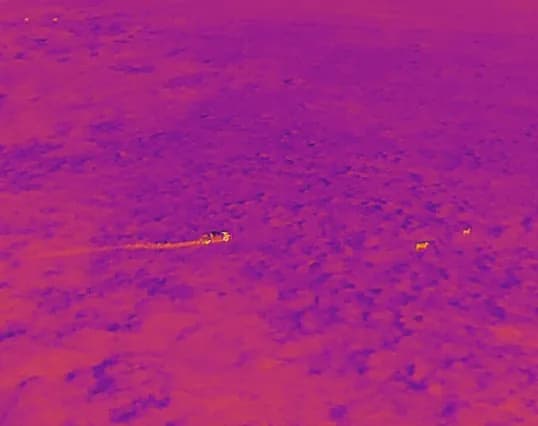
Aerial Accuracy has used thermal imaging to locate lost cattle. Feedlot health screening is a separate forward-looking capability; pen riders and veterinarians make the field determination.
Screening Tool
±3°C Accuracy
Surface temperature screening to flag animals for ground examination
Rapid Coverage
Large Pens
Aerial overview of accessible pen conditions, with planned coverage and gaps disclosed
Complementary Data
Decision Support
Assists pen riders in prioritizing animals for closer veterinary review
Thermal Screening Capabilities
Temperature Anomalies We May Detect
- ▸Surface temperature variations that may indicate fever or temperature stress (requires veterinary follow-up for diagnosis)
- ▸Pen-level thermal patterns suggesting environmental issues, respiratory concerns, or animal clustering
- ▸Infrastructure anomalies like water trough malfunctions or shade structure issues
- ▸General distribution patterns to prioritize ground inspection efforts
Our Process
- 1.Aerial thermal imaging of pens under optimal conditions (morning/evening, clear weather)
- 2.640×512 radiometric sensor captures surface temperatures (±3°C accuracy per manufacturer specs)
- 3.Manual review of thermal imagery to identify anomalies for ground investigation
- 4.Provide georeferenced thermal maps and anomaly reports to guide pen rider inspections
Applications by Operation Size
Thermal screening can serve as a supplemental tool alongside your existing health monitoring program:
Small Operations (5,000 head)
May help prioritize which pens receive closer pen rider attention during high-risk arrival periods
Medium Operations (10,000 head)
Aerial overview can assist in systematic pen monitoring when combined with ground observations
Large Operations (25,000+ head)
Broader coverage may help identify pen-level patterns for further investigation
Contact us to discuss how thermal screening might fit into your operation's specific needs.
Critical Timing Windows
High-Risk Periods
- • First 30 days after arrival (highest BRD risk)
- • Weather transitions (20°F+ temperature swings)
- • Post-processing/vaccination stress
- • Summer heat waves (June-September)
Optimal Scan Times
- • Morning: 6-9 AM (baseline temperatures)
- • Evening: 4-7 PM (peak fever detection)
- • Daily during first 14 days post-arrival
- • 2-3x weekly during stable periods
West Texas Feedlot Coverage
Serving the concentrated feedlot operations across the Panhandle. Based in Hale County, we provide rapid local access to surrounding counties.
Primary Service Area - No Travel Fees
Hale County
Our home base
Castro County
Major feedlot concentration
Swisher County
Growing feedlot sector
Extended Service Area - Mileage Fees Apply
Parmer County
#4 nationally in fed beef
Randall County
Canyon corridor feedlots
Deaf Smith County
Hereford beef capital
Contact us for transparent pricing including travel fees for extended service areas.
Integration with Your Systems
Data Export Options
- • CSV files with pen/tag IDs
- • Heat maps of entire facility
- • Individual animal temperature reports
- • Time-series tracking for chronic cases
Compatible With
- • Cattle management software
- • Electronic ID systems
- • Treatment record databases
- • Performance tracking systems
Important Scope & Expectations
Our thermal screening services deliver aerial temperature mapping to complement your pen rider observations and veterinary care programs. We provide georeferenced thermal data and anomaly reports to help prioritize ground inspection efforts during high-risk periods. Here's a transparent overview of our service parameters:
Engaging our services means you value this professional, research-informed approach to thermal screening as a complementary tool in your comprehensive animal health program.